
If you’ve started researching attic insulation, you’ve probably come across radiant barriers. Some contractors recommend them for every home, while others say they’re unnecessary. So who’s right?
Like many home improvement questions, the answer depends on where you live and how your home is built. Here in California, especially throughout the Bay Area, a radiant barrier can be an excellent investment when it’s installed for the right reasons and paired with other attic improvements. It isn’t a replacement for insulation, but it does help reduce one of the biggest sources of unwanted heat entering your home.
At EM Energy & Air, we install radiant barriers alongside attic insulation, air sealing, ventilation improvements, and attic restoration projects. Looking at the attic as a complete system usually produces the best long-term results.
First, What Does a Radiant Barrier Actually Do?
It Reflects Radiant Heat Instead of Absorbing It
Most of us have felt radiant heat without realizing it. Stand in direct sunlight on a warm afternoon and you’ll feel heat on your skin even if the air temperature isn’t particularly high. That’s radiant energy at work.
Your roof experiences the same thing every day. As the sun heats your roof, that heat radiates downward toward the attic. A radiant barrier works by reflecting most of that radiant energy back toward the roof instead of allowing it to transfer into the attic.
According to research from the U.S. Department of Energy and the Oak Ridge National Laboratory, properly installed reflective radiant barriers can reflect approximately 95% to 97% of radiant heat striking their surface. That’s a remarkable amount of energy that never enters the attic in the first place.
It Is Not the Same as Insulation
This is probably the biggest misconception homeowners have; Insulation slows conductive heat transfer. A radiant barrier reduces radiant heat transfer. Those are two completely different processes.
Think of insulation as slowing heat once it has already entered the attic. A radiant barrier helps reduce how much of that heat enters the attic to begin with.
Why California Homes Benefit More Than Many Other Parts of the Country
Our Cooling Season Lasts Much Longer
Radiant barriers make the most sense in climates where homes spend a significant portion of the year fighting heat rather than trying to retain it.
That describes much of California very well.
Even though the Bay Area enjoys relatively mild weather compared to inland communities, our roofs still absorb intense sunlight for months at a time. Long sunny afternoons continually add heat to the attic, forcing cooling systems to work harder than necessary.
Roof Temperatures Become Surprisingly High
Many homeowners are surprised to learn just how hot their roof becomes during summer.
An asphalt shingle roof can easily reach temperatures between 150°F and 170°F on a sunny afternoon. It’s common for attic temperatures to climb well above 120°F, and in some homes they approach 140°F before beginning to cool later in the evening.
That accumulated heat doesn’t simply stay in the attic.
It radiates through the ceiling, warms ductwork, increases the temperature around HVAC equipment, and eventually finds its way into your living space.
How a Radiant Barrier Helps Your HVAC System
Less Heat Builds Up Inside the Attic
Because a radiant barrier reflects so much of the incoming solar energy, attic temperatures generally stay lower throughout the day.
That doesn’t mean the attic becomes air conditioned. It simply means the attic doesn’t become quite as hot, which has benefits throughout the rest of the home.
Your Air Conditioner Doesn’t Have to Fight as Much Heat
Every degree of unnecessary attic heat eventually increases the workload on your air conditioner.
Lower attic temperatures reduce the amount of heat entering the home through the ceiling. That translates into a smaller cooling load, especially during the hottest part of the afternoon.
The U.S. Department of Energy estimates radiant barriers can reduce cooling costs by roughly 5% to 10% in homes located in warm, sunny climates. Actual savings depend on insulation levels, ductwork location, roof design, and several other factors, but the reduction in cooling demand is well documented.
Some Homes Benefit More Than Others
Older Bay Area Homes
Many homes throughout the Bay Area were built decades before today’s insulation standards. Some attics still contain aging fiberglass batts or compressed blown insulation that no longer performs particularly well. Adding a radiant barrier during an insulation upgrade helps reduce heat entering the attic while the new insulation slows whatever heat remains.
Homes With HVAC Equipment or Ductwork in the Attic
This is one of the biggest reasons we recommend radiant barriers.
When air ducts sit inside a superheated attic, they begin absorbing that heat almost immediately. Even insulated ducts warm up as conditioned air travels through them.
By lowering attic temperatures, a radiant barrier helps reduce heat gain into the duct system, allowing cooler air to reach the living space more efficiently.
Homes With Large Roof Areas
Homes with broad roof surfaces receive more solar exposure throughout the day.
South-facing and west-facing roof sections often experience the highest heat gain during summer afternoons. These homes frequently see some of the greatest benefit from radiant barrier installation.
Should You Install a Radiant Barrier Without Improving Insulation?
Usually Not!
If your attic has very little insulation, a radiant barrier alone probably shouldn’t be your first upgrade.
Insulation still provides the primary resistance to heat moving through the ceiling. Without enough insulation, a radiant barrier cannot fully compensate for the missing thermal protection.
This is why we inspect the attic before making recommendations instead of suggesting the same solution for every homeowner.
The Best Results Come From Combining Improvements
Our favorite projects are the ones where we can address several issues at once.
For example, we may recommend:
- Air sealing around ceiling penetrations
- Removing damaged or contaminated insulation
- Installing new attic insulation
- Adding a radiant barrier
- Improving attic ventilation
Each improvement supports the others. Together they create a more comfortable, efficient home than any single upgrade could accomplish on its own.
What Does Installation Involve?
Installed Beneath the Roof Deck
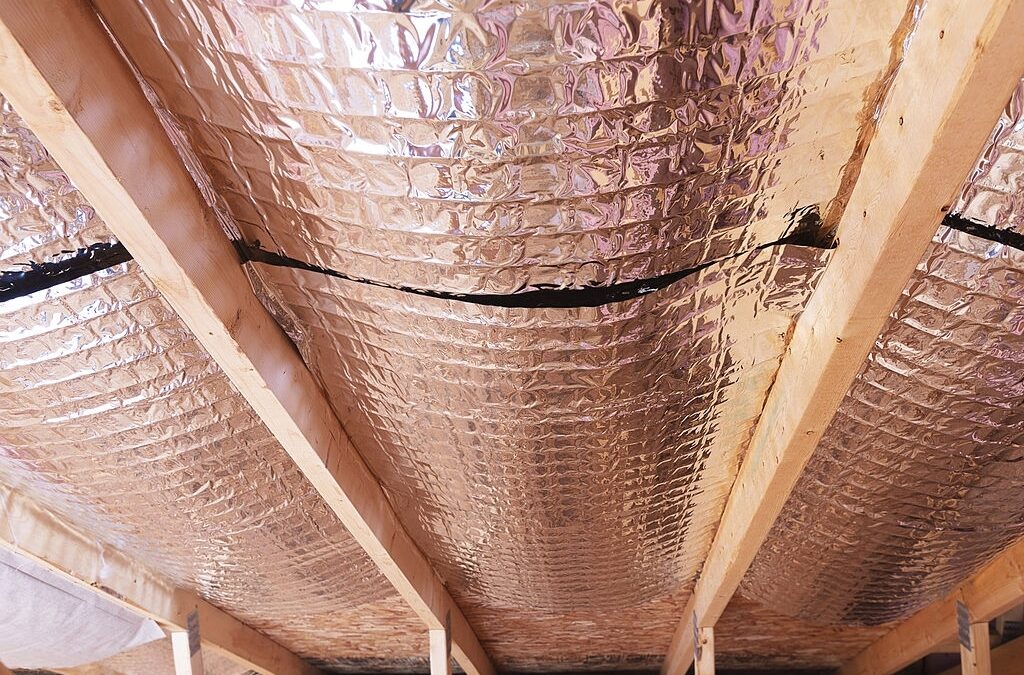
Most radiant barriers consist of reflective aluminum foil laminated to a durable backing.
During installation, the material is secured to the underside of the roof framing. This allows it to reflect radiant heat before it spreads throughout the attic. The installation itself is usually much less disruptive than homeowners expect.
Proper Installation Makes a Difference
A radiant barrier only works well when it’s installed correctly.
It should not block attic ventilation or interfere with existing airflow. The reflective surface also needs an adjacent air space to perform effectively. Poor installation can reduce the product’s effectiveness and limit the benefits homeowners expect.
So, Is a Radiant Barrier Worth It?
For many homeowners, yes. A radiant barrier helps reduce attic temperatures, lowers the amount of heat entering the living space, supports HVAC efficiency, and improves overall comfort during warmer months. While it isn’t a substitute for quality insulation, it complements insulation extremely well.
If you’re already replacing attic insulation, restoring an attic after rodent activity, or improving attic ventilation, adding a radiant barrier often becomes much more cost-effective because the crew is already working in the space.
Rather than treating each improvement as a separate project years apart, many homeowners choose to complete everything together and enjoy the benefits immediately.
Schedule a Free Attic Inspection
If you’re wondering whether a radiant barrier makes sense for your home, EM Energy & Air can help. We provide attic inspections, radiant barrier installation, insulation replacement, attic ventilation upgrades, ductwork improvements, and complete attic restoration throughout San Jose, Sunnyvale, Cupertino, Palo Alto, Redwood City, Fremont, Hayward, San Mateo, Santa Clara, Mountain View, and surrounding Bay Area communities.
We’ll evaluate your attic, explain what we find, and recommend improvements that make sense for your home, your budget, and your long-term comfort.